Behavioral science plays a big role in shaping how products and services are designed. Many teams mention ideas such as scarcity, defaults, or loss aversion, but few know how to use them well or responsibly in real-world situations.
Coglode has spent the past ten years working to close this gap between theory and practice. CEO, founder, and designer Jerome Ribot founded Coglode in 2014 to make behavioral science easier for product and experience creators to use. It started as an internal tool but has grown into a popular set of resources and training programs that help teams turn academic research into practical choices.

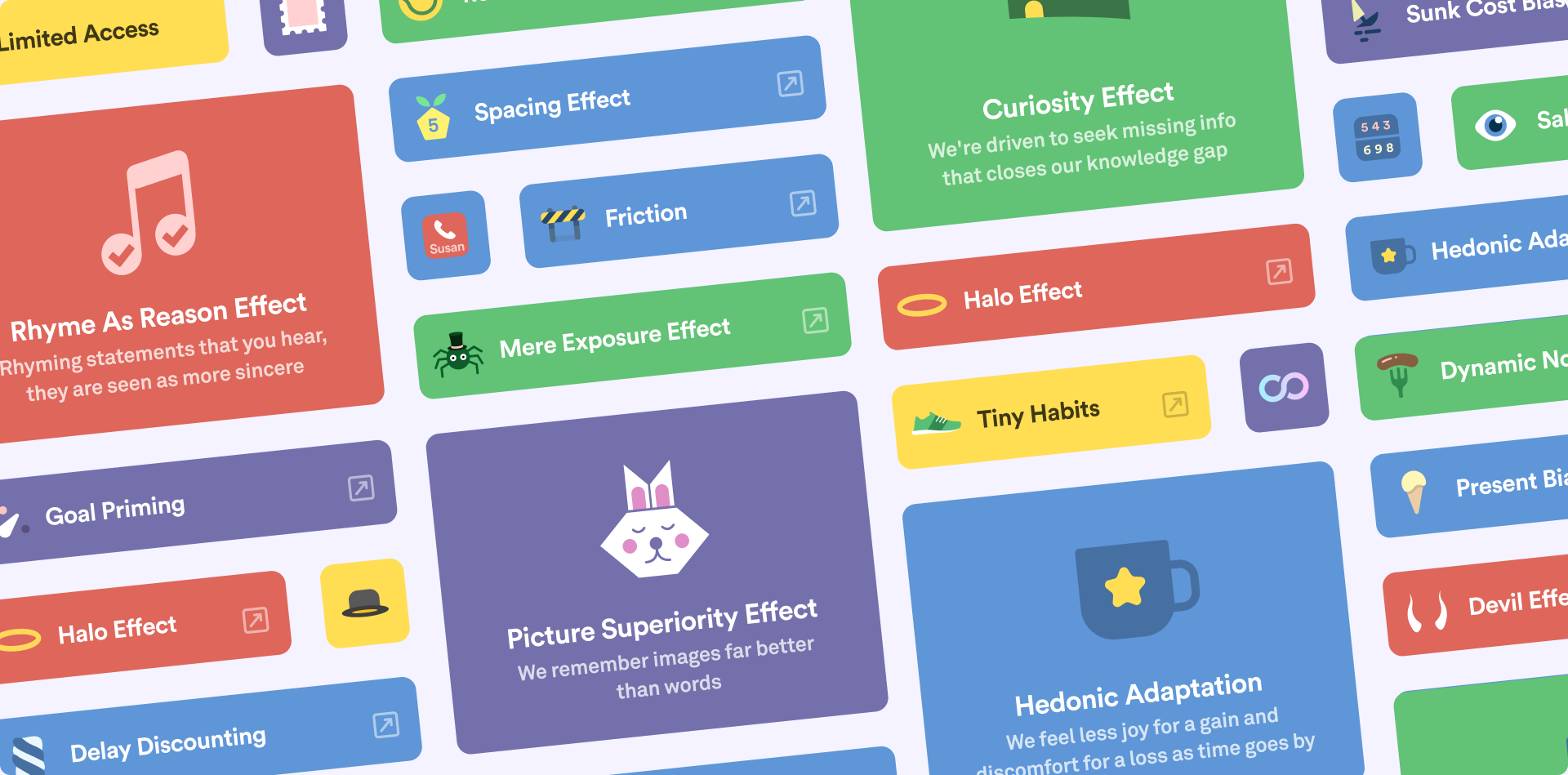
Their best-known product, Nuggets, breaks down behavioral insights into short prompts that spark discussion, challenge assumptions, and encourage more thoughtful design. Coglode also offers training, develops tools such as the Cookbook platform, and works with organizations including Spotify, Google, Apple, Barclays, BCG, and the World Bank.
At its core, Coglode’s philosophy is about distillation and application: making research understandable, usable, and connected to everyday decisions.
Rather than treating behavioral science as a set of tactics to drive short-term metrics, Jerome has consistently advocated for a more thoughtful approach, one that prioritizes long-term trust, emotional outcomes, and ethical design.
As Coglode marks its tenth year, the team is also setting an ambitious goal for the decade ahead: to demonstrate £100 million in measurable behavioral impact through its work.
In this interview, I talked with Jerome about common behavioral mistakes in today’s design industry, how teams can create a shared language around behavior, and why curiosity—not control—will shape how designers work in an AI-driven future.
Q&A with Jerome from Coglode
When you look at the design industry today, what behavioral mistakes do you see most often, and why do they persist?
One of the most common mistakes is the heavy-handed use of behavioral science to pursue short-term gains at the expense of long-term brand trust.
In a rush to prove ROI, teams often overuse principles like scarcity, loss aversion, or friction in ways that feel coercive. This triggers reactance — our instinctive urge to reclaim autonomy when we feel pushed too hard. You might retain someone for a little longer, but you’ll leave them frustrated, resentful, and far less likely to return.
The long-term alternative is confidence: make it easy to leave when it makes sense, ask thoughtful questions, and part on good terms. People may forget what you did, but they won’t forget how you made them feel — and that applies just as much to brands as it does to people.
How can designers balance using behavioral insights for inspiration with making sure they’re applying evidence appropriately and in the right context?
Behavioral insights are powerful, but they’re highly context-dependent.
Take scarcity. A coffee brand shouting “limited stock” and flashing urgency cues creates anxiety and avoidance. Another shop quietly presenting a “very rare” £10 coffee reframes scarcity as an invitation to appreciate quality. Same principle, but completely different emotional outcome.
So the question isn’t “Does this principle work?” but “How should our brand use it?” How should it leave people feeling? Is that on-brand? Small, low-risk experiments can help teams develop a feel for what’s both effective and appropriate.
If a team wanted to start using behavioral science tomorrow, what would be the smallest, most effective first step?
Start by building a shared behavioral language.
In our training, we ask each team member to pick one behavioral “Nugget” that resonates with them and explain why. This takes as little as ten minutes, requires no prior knowledge, and immediately sparks discussion and application ideas.
Done regularly, it becomes a lightweight habit that helps teams think more clearly - and more humanly - about their work.
Which behavioral insights or patterns feel most relevant for 2026, given the rise of AI, the increased cognitive load from information proliferation, and shifting attention habits?
As we hand over more tasks to AI tools, we’re seeing both an increase in Analysis Paralysis and a reduction in Autonomy.
On Analysis Paralysis, or our tendency to shut down when presented with too much information, there’s been a significant uptick in the cognitive resources required to process and internalise what AI provides. If we think the Internet Age changed our brains, then we’re in for a shock when it comes to AI.
Now, with AI data being highly personalised, with added memory and increasing processing speed, we’re at even greater risk of being overwhelmed by the very tools that aim to make our lives easier.
We’ll see a shift towards more thoughtful, concise, and visual information formats that honour our cognitive limitations.
The other behavioural pattern concerns autonomy. As we increasingly hand over tasks to AI, there’s a natural existential dilemma regarding our own role in the process. Many creative people still feel this fear and remain reluctant to engage with AI tools, fearing they will lose control and, in turn, a sense of their unique value.
However, the fear around our value can be overcome by recognizing that, as creative people, AI tools enable us to extend what we already do so well into brand-new areas. So, the visual artist can now explore motion for the first time. The writer can now compose songs. We can express our creativity in new ways that build on our talents, rather than feeling replaced.
The behavioural antidote to a fear of diminishing creative control isn’t resistance - it’s curiosity. We need to lean in, let go of the rigid way we see ourselves, and let new AI tools have us playfully explore uncharted paths like never before.
What design decisions tend to have disproportionate behavioral impact but are often overlooked?
Defaults: We tend to stick with the preselected option.
They quietly shape behavior everywhere, from AI tools that switch you to new models to apps that pre-select expensive options or sort by popularity rather than price.
Because defaults lower cognitive effort, their influence is only growing. Teams should regularly audit them: What’s the default? What’s the alternative? Is it intentional, clear, and fair? Defaults that feel sneaky can erode trust faster than almost anything else.
What have you learned about teaching behavioral science to mixed teams?
I recall a story after training a mixed team at Google DeepMind a few years back.
One team member had a PhD in Behavioural Science. Towards the end of the training, they asked if they “could have a word.”
Surely I had disappointed them and somehow dumbed down our discipline, and they wanted to tell me so, albeit in confidence?
When I told her my fears, she laughed.
“No, Jerome, you don’t understand. Honestly? I’ve often felt that my expertise has held me back; I’ve felt alone because no one speaks my language. Introducing a common behavioural language with my team has been a game-changer for us. But selfishly? It makes my job that much easier, too! So thank you.”
My biggest takeaway from teaching mixed teams is the power of understanding, communicating, and solving problems through a shared behavioural language. Since then, we always recommended training mixed teams. When everyone can reason together about human behavior, better decisions follow naturally.
Where do you recommend people start when exploring your tools and resources?
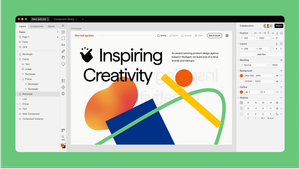
- Start with our free Figma Behavioral Design Library to help annotate and justify design decisions.
- Next, Nuggets Box One is a simple way for teams to build shared behavioral understanding through discussion and practice.
- For faster progress, our one-day training sessions work well.
Coglode Intelligence