
Design inspiration serves many purposes. It’s useful in getting anchored in new projects, developing ideas, and taste. A strong visual library trains your eye, fuels originality through connection, and helps you see what makes design effective. Whether you save inspiration in Figma, MyMind, or a folder on your desktop, what matters most is using it intentionally, as a creative habit that sharpens both your craft and your design thinking.
Design inspiration is one of the quiet activities behind great product design. A library of inspiration is simply a collection of images and examples that resonate with you, interfaces and designs you admire, an interaction that feels clever, or visuals that impress. They can come from anywhere: a product you’re using, a website you love, something you spot on Twitter, or one of the many professional resource sites designers rely on.
A library of inspiration builds awareness of how products solve problems, shape experiences, and express ideas. Over time, this practice becomes a creative habit that helps us start faster, think more broadly, and refine our sense of what “good” really looks like.
Here’s how I use design inspiration in my own process.
Getting anchored
Looking at design inspiration is one of the first things I do when starting a new project. Why? Initially, a new project is wide open and somewhat ungrounded. There’s excitement, but also some uncertainty about where to start. Finding inspiration helps anchor the work. It’s how I begin to understand the space, the possibilities, and the kind of energy the project might need.
Once I start looking at different designs, things begin to fall into place. My brain starts connecting ideas, and they begin to take shape; most importantly, I feel a sense of momentum.
Explore and diverge
The beginning of any design process is exploratory and divergent, and that’s intentional. Casting a wide net helps me explore new directions and uncover interesting ideas and possibilities. It’s how I start to figure out what works and what doesn’t, and begin narrowing.
Having a cache of design inspiration ready to go helps speed up this process by widening the range of ideas I can explore and refine.
Sharing inspiration
Sometimes, I’ll share design inspiration for a project so that my teammates and stakeholders can be part of the process. Pictures and examples often tell a clearer story than words alone. This becomes especially valuable when working with cross-functional teams. Visual references make it easier to point to proven patterns and help non-designers understand design decisions. In that way, design inspiration strengthens collaboration.
That said, inspiration is personal. It’s part of how each of us works and thinks. While sharing some of your design references can be helpful, you should never feel pressured to open up your entire library.
Always learning
We’re all a work in progress, and so are our design skills. I never consider myself done learning or improving. Design trends evolve, conventions change and emerge, and there’s always something new to explore.
Design inspiration helps me see different ways of solving problems and exposes me to exceptional work from other designers. That perspective pushes my skills forward and reminds me that growth is part of the process.
I’m realistic about where I stand; there’s always room to grow. And design inspiration, especially when it’s rooted in big visions and bold ideas, helps me think more deeply and expand my approach to design.
As designers, our inspiration libraries aren’t just tools for getting started. They shape how we see, think, and create. Over time, the practice of collecting and studying design work evolves into something more profound: a training ground for discerning taste and originality in ideas.
Beyond helping you start and get inspired, design libraries also play a deeper role: they shape your taste and fuel originality. How you collect and connect what inspires you determines the kind of designer you become.
Developing taste
Building a visual inspiration library helps you train your eye. Over time, it becomes a quiet but powerful practice that shapes your aesthetic judgment and strengthens your sense of style.
Taste is one of a designer’s most important skills. In a world where AI can produce limitless variations, what defines you isn’t output, but taste, and the skill to translate that taste into thoughtful design.
Developing taste comes from active curation and creation, not passive consumption. Each time you add something to your library, you’re choosing something that resonates with you. That act of selection brings you closer to finding your own style, builds discernment, and teaches you to recognize quality.
The more you expose yourself to great design, the more fluent you become. Over time, you begin to notice relationships between composition, expression, and form that others might overlook. You begin to understand why certain designs feel balanced, inviting, or powerful.
Your visual library becomes a reflection of your evolving sensibility. What draws your attention, what feels timeless, and what feels distinctly “you.” And as your taste sharpens, so does your ability to create work that feels clear, intentional, and unmistakably your own.
Connecting ideas to spark originality
The process of gathering and combining ideas from diverse sources mirrors how creativity truly works. We rarely create something from nothing. Instead, original ideas emerge when we connect what already exists in new and unexpected ways.
Creativity is inherently combinatorial. Albert Einstein called it “combinatory play,” describing how memory, experience, and imagination come together to form something unique. Great ideas often begin with noticing how two unrelated things might fit—or clash—in interesting ways. Design inspiration fuels this process by exposing us to patterns, forms, and ideas that can later collide and spark something new.
Research backs this up: most innovation doesn’t come from brand-new ideas but from reshaping old ones in fresh contexts.
The key is exposure. To connect diverse ideas, we need to feed our minds with diverse inputs, different disciplines, styles, and ways of thinking. That’s why building an inspiration library is so valuable. It gives your ideas a place to mix, evolve, and grow. When you curate references thoughtfully, you begin to spot connections that others might overlook.
In the end, gathering and combining inspiration is more than a creative exercise; it’s a skill. It reflects how designers think, learn, and push boundaries. Every idea we create carries echoes of what came before, transformed by our own perspective.
Where to find design inspiration
There’s no shortage of places to find design inspiration, but some sources are more useful than others. What matters most is the quality of what you collect and whether it reflects real, working design, not just polished concepts.
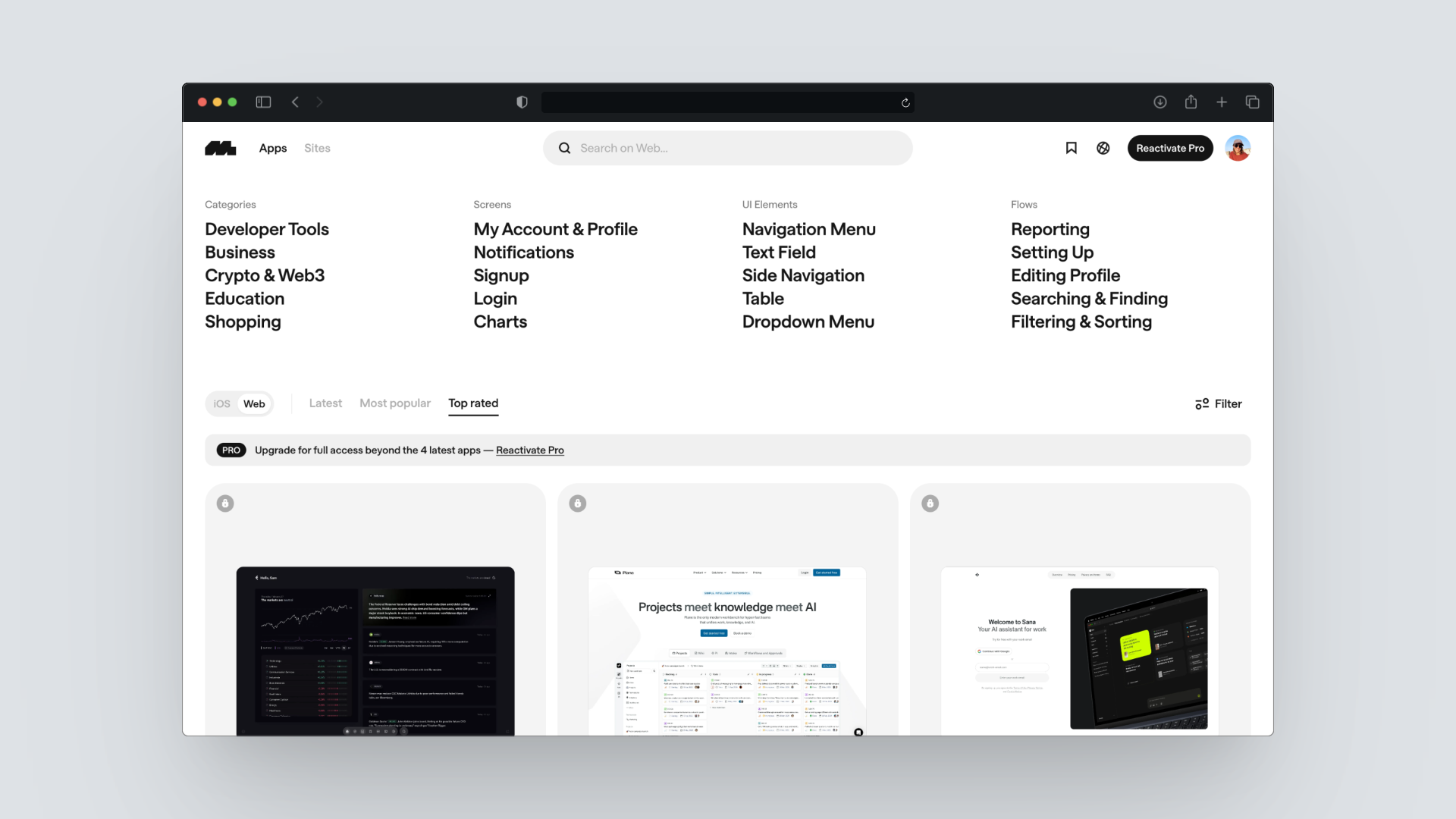
For mobile, product, and interface designers, Mobbin is one of the most valuable resources out there. It’s a huge, searchable library of screenshots and flows from real apps and websites, making it ideal for studying how successful products actually handle design problems. You can browse full user journeys, compare patterns across platforms, and see how teams solve common UX challenges in the wild. It’s practical inspiration rooted in real-world use.
If you’re looking for a more curated and wide-ranging collection, UI Goodies, a design resource I created, offers an Inspiration page dedicated to high-quality tools, galleries, and references. It’s a thoughtfully organized space that makes it easy to discover new sources without the overwhelm, whether you’re exploring visual trends or building your own reference library.
For web design specifically, A1.gallery has become one of the best curated sources of inspiration. It’s clean, considered, and refreshingly free of clutter. Beyond that, there are numerous other platforms, such as Dribbble, Behance, and Awwwards, and the key is to use these resources intentionally. Each reflects a different slice of the design world.
Make inspiration hunting a daily habit
If design inspiration excites you and you want to do more of it, make it a habit. Treat it like part of your design practice, not a side activity you only do when you have time. Even ten minutes a day is enough to discover something new that inspires you.
You might spend a few minutes each morning browsing your favorite inspiration sites. Some designers set aside a short block of time after lunch or before wrapping up the day to explore, reflect, and add to their library. It doesn’t need to take long, but consistency matters. A few minutes of intentional exposure each day can compound your ideas and creative energy.
By establishing a daily rhythm of finding and examining good design, you begin to notice what works and what aligns with your personal taste. Over time, this type of training will sharpen your skills and intuition, helping you design with greater confidence, clarity, and creative depth.
The best ways to save your design inspiration
Once you start collecting design inspiration, the next question is where—and how—to keep it. Every tool shapes the kind of relationship you have with your library. Some are about permanence, others about discovery. The best choice depends on how you work and what you value most.
Read on for some of the best ways designers can save and organize their inspiration, and what makes each approach useful in different contexts.