

Thanks to today’s powerful creative tools, the internet is experiencing a true renaissance.
Side projects, playful experiments, design, and coding all feel alive again. Designers are tapping into a renewed sense of creative energy. The tools have lowered the friction, but they’ve also shifted people’s mindset back toward fun, curiosity, and the creative process itself.
You can see it in how people are approaching their websites and portfolios.
There’s more personality. More risk-taking. Less polish for the sake of it, and more expression. And given the current state of the job market, there’s never been a better time to show who you are through your work, not just what you’ve done, but how you think and what you care about.
This week, I want to share a few portfolio sites that caught my attention. Hopefully, they spark a few ideas for what you might explore in your own work.
Enjoy!
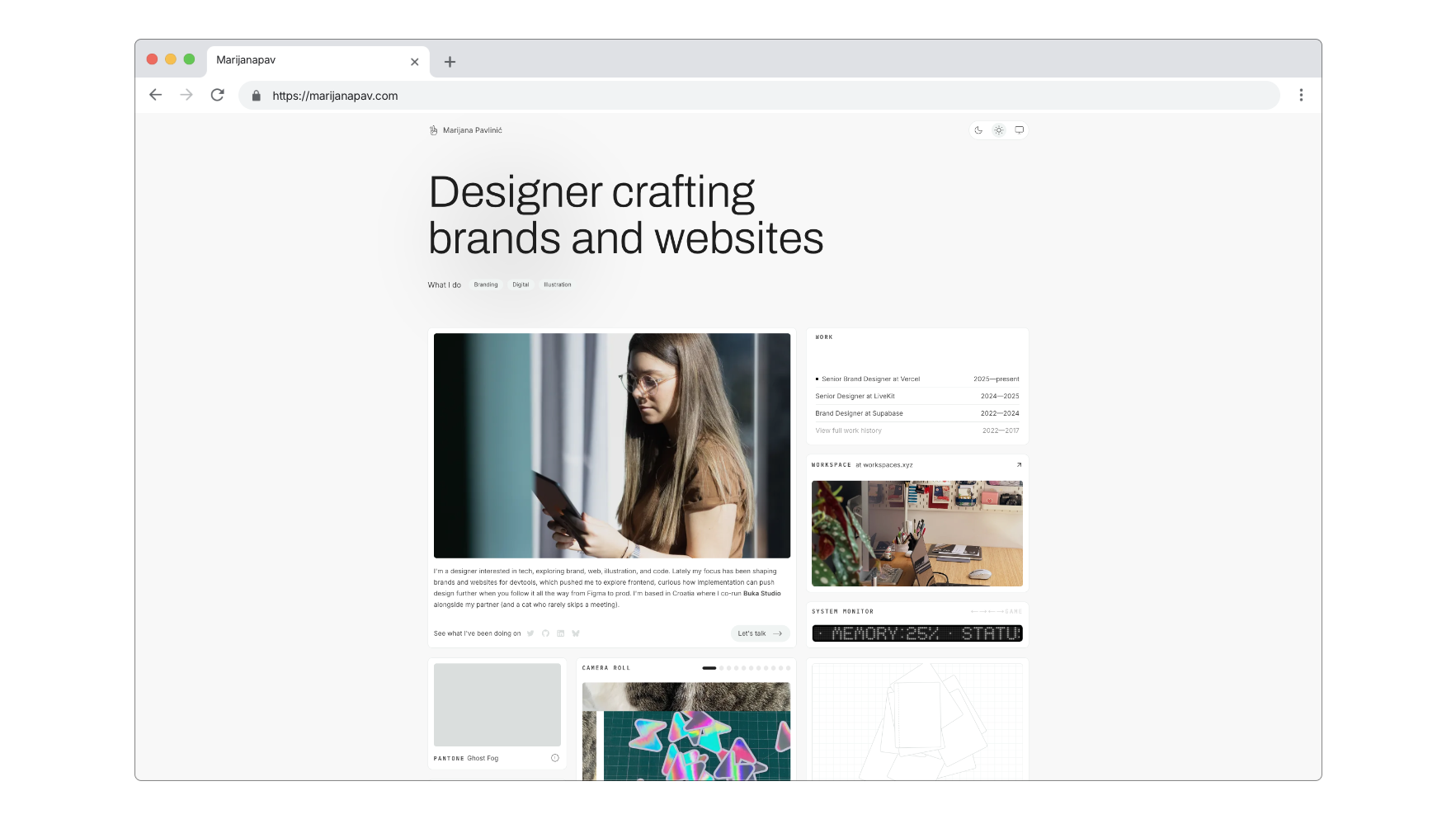
Marijana Pavlinić, Brand Designer at Vercel
Marijana Pavlinić’s portfolio exemplifies thoughtful design: structured and playful, yet purposefully understated. While it employs a Bento layout, the result is elevated and refined. Professional work appears alongside personal snapshots, side ventures, and projects in progress, creating a camera roll effect that invites exploration. The layout feels more like a well-organized workspace than a traditional portfolio. Her creative process comes through, combined with some project context and fragments of daily life. This minimalist approach gives every element room to breathe, making the portfolio feel fresh, authentic, and easy to navigate. Even without bold visuals or animation, the careful structure and purposeful curation leave a memorable, lasting impression.
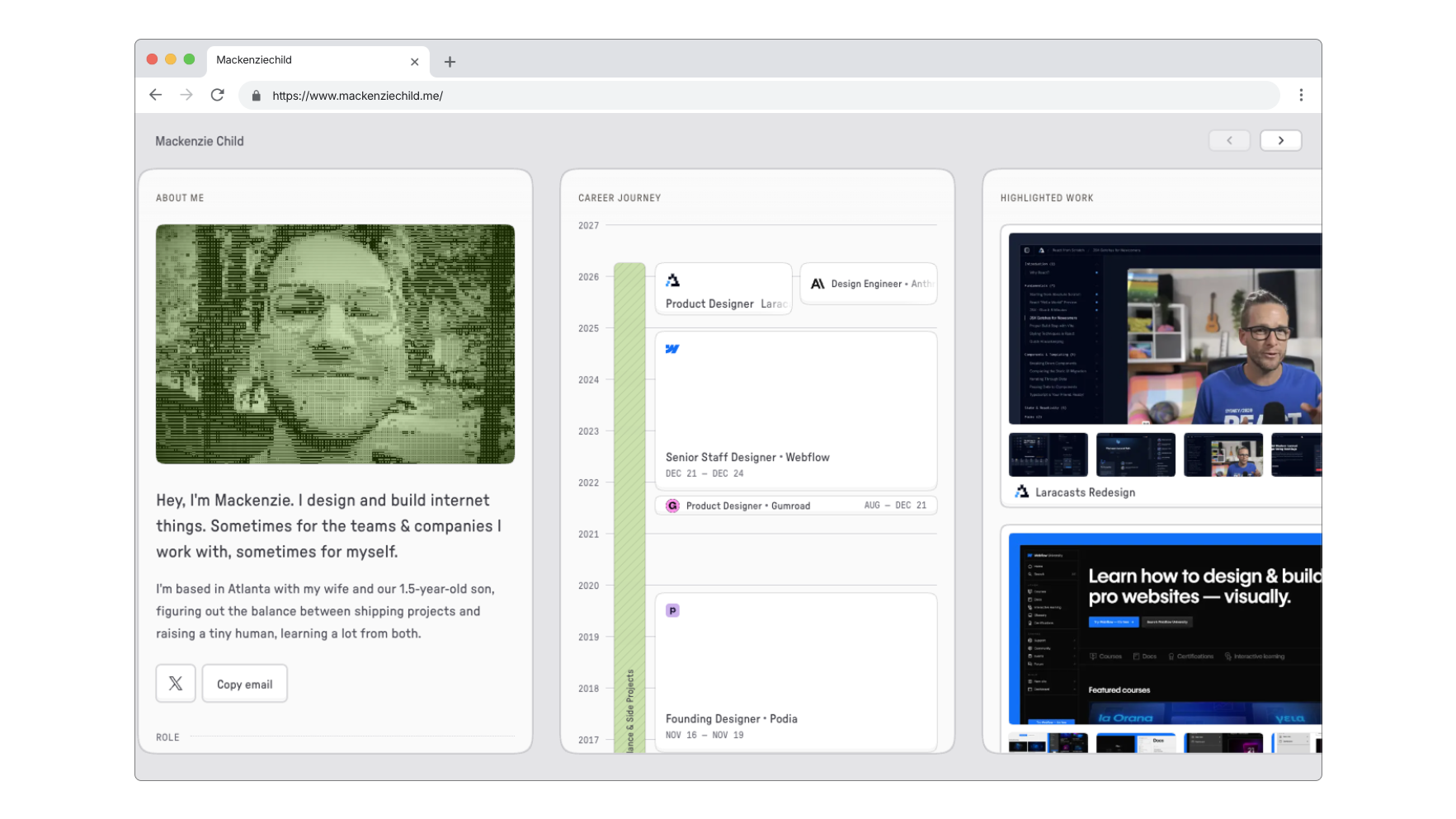
Mackenzie Child, Product Designer at Laracasts
Mackenzie Child’s portfolio is shaped by a clear sense of ownership and intentional, product-inspired structure, reflecting his design engineering roots. The site is anchored by a concise career timeline that tells his story at a glance, while side projects, experiments, and teaching add depth and variety. Everything is presented clearly: visitors quickly grasp what he does and how he works, aided by the inclusion of tools and personal projects that add texture without clutter. Instead of relying on flash, Mackenzie’s portfolio communicates substance and evolution, inviting exploration of a thoughtfully curated, ever-growing body of work.
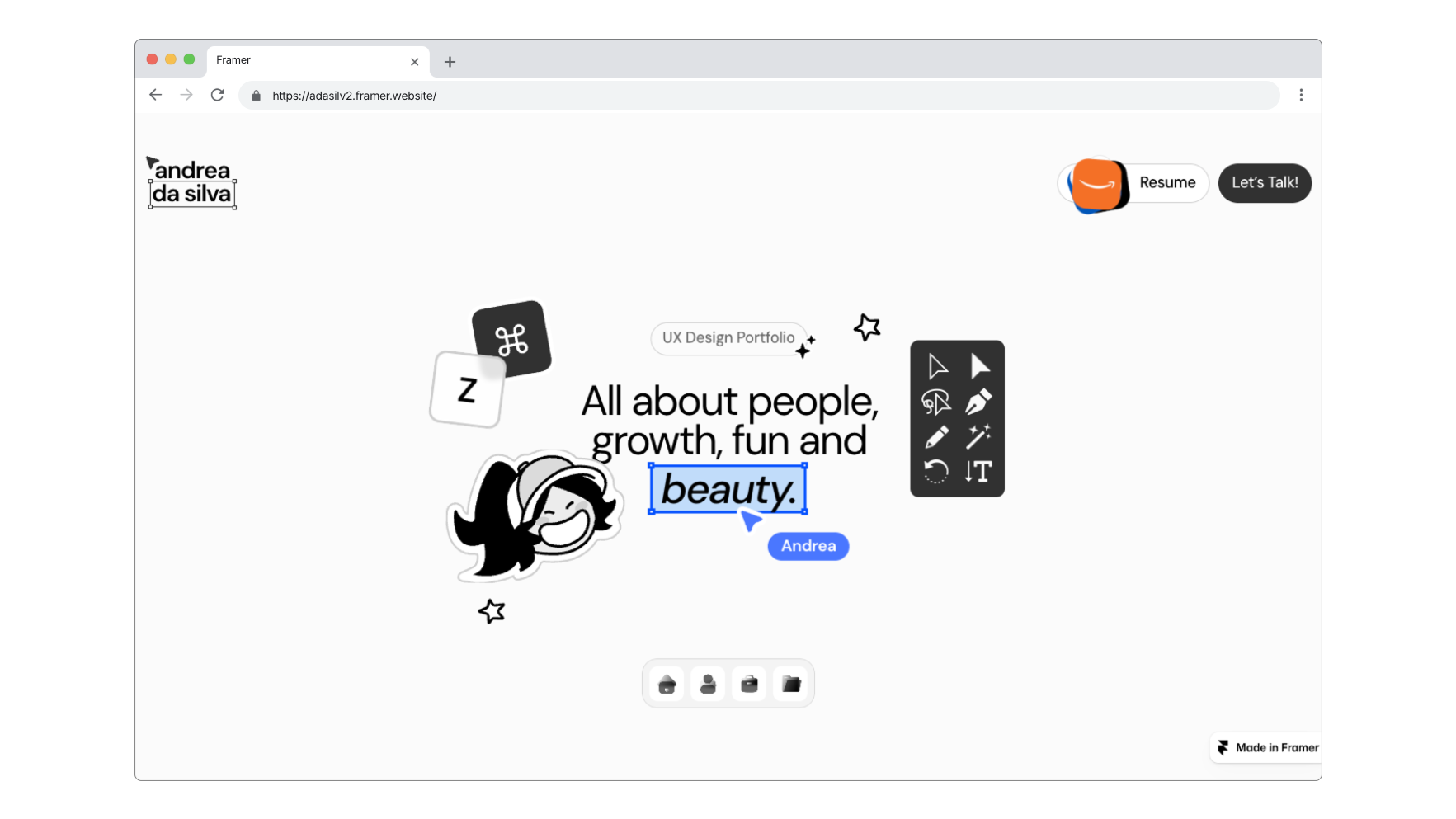
Andrea Da Silva, Product Intern @ Metalab
Andrea Da Silva’s portfolio instantly draws you in with its lively spirit and inventive design. From the outset, you’re greeted by a collage-like mix of typography, icons, and motion that sets a playful but polished tone. The site’s open layout gives every section room to breathe, making each project, case study, and testimonial feel intentional and easy to navigate. Modular card designs allow different facets of her work to shine, while subtle hovers and micro-interactions guide attention and make the experience feel tactile and responsive. This careful attention to detail creates a portfolio that balances personality with usability, proving how small, thoughtful touches can add depth.
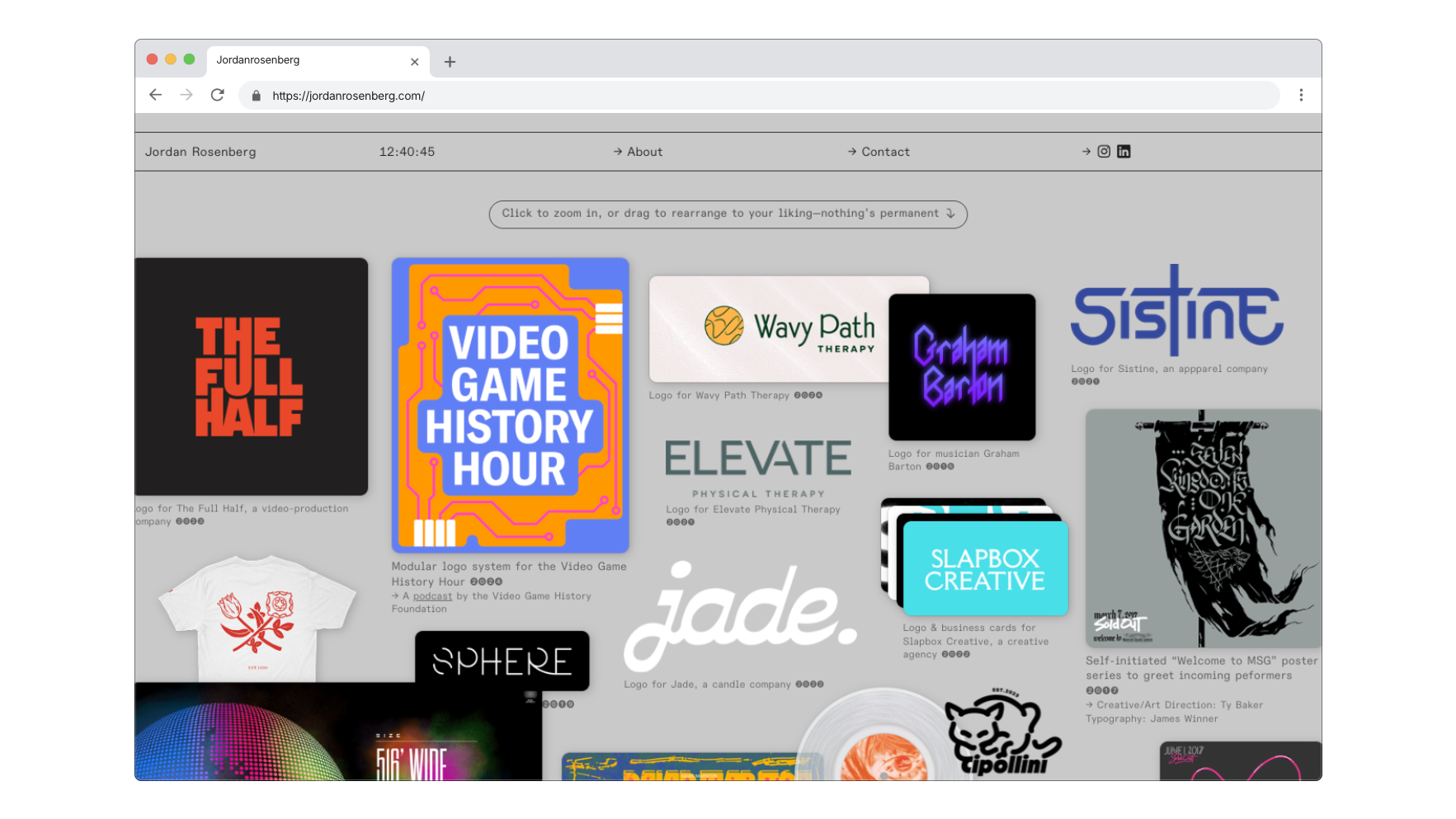
Jordan Rosenberg, Designer and Illustrator
Jordan Rosenberg’s portfolio breaks away from tradition, inviting pure discovery rather than guiding visitors down a set path. The site feels more like an open canvas or a studio pinboard. Everything is presented at once, encouraging curiosity and active exploration. Clicking on any piece lets you dive deeper, reinforcing an atmosphere of creative freedom and openness. At first, the sheer density can seem overwhelming, but this mirrors the true nature of creative work: experimental, multifaceted, and always in progress.
Instead of highlighting only a handful of polished case studies, the portfolio showcases an impressive range and volume, giving a sense of taste, consistency, and style across many projects. Borrowing cues from physical creative spaces, you’re invited to scan, scroll, and focus on what draws your eye, making the experience participatory rather than passive. The approach is intentionally opinionated and may not suit everyone, but that’s what makes it memorable. By prioritizing exploration over hierarchy, the portfolio feels alive, authentic, and uniquely reflective of Rosenberg’s creative voice.